Compact thermal drone gimbalAirborne payloads
PD70
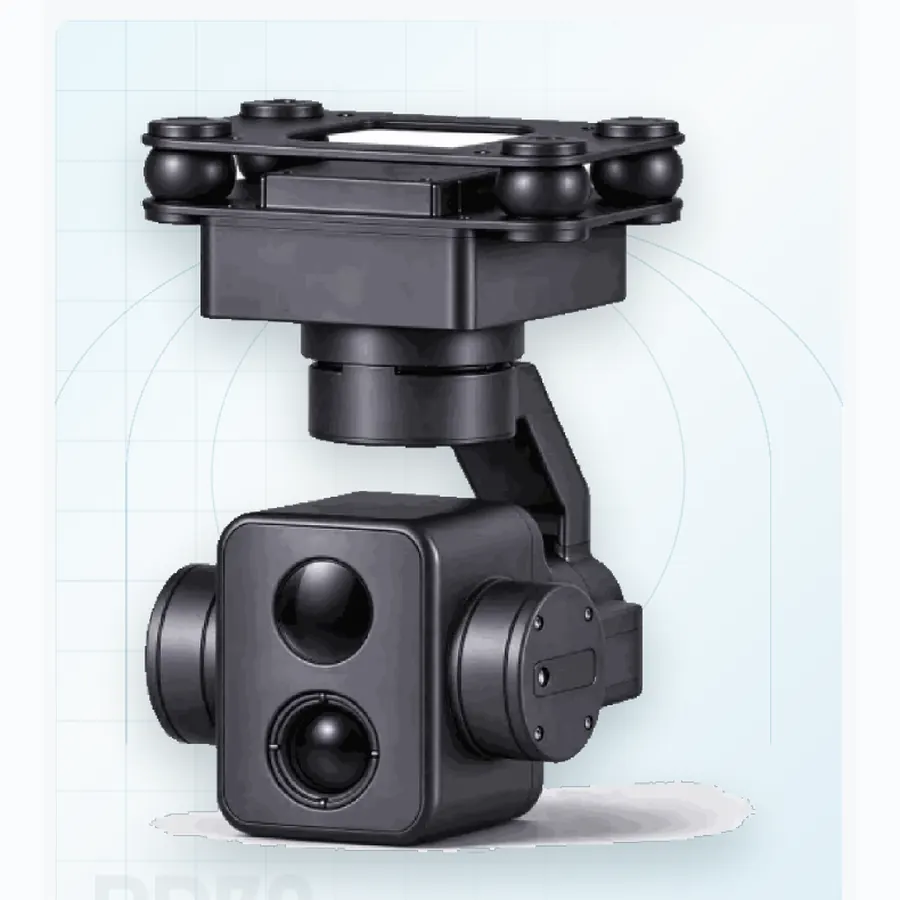
A 250 g three-axis gimbal with thermal and 4K.
≤250 gMass
640×512Thermal
3-axisAxes
Thermal payloads
A useful thermal payload is defined by the target-to-background contrast, the required field of view and the platform budget, not by detector resolution alone.
Selection criteria
Use the same requirement boundary for every candidate, then compare documented evidence rather than headline numbers.
Read resolution, pixel pitch, focal length and field of view as one optical chain.
Request matched frames at representative distance, contrast and zoom, with gain mode and processing recorded.
If temperature measurement is required, confirm calibration, emissivity assumptions and measurement workflow.
Supplier evaluation
Use matched image evidence, detector and lens data, installed mass and power figures to compare candidates on the same mission requirement.
Product family
Open a model page for supplier-stated specifications and integration notes.
A 250 g three-axis gimbal with thermal and 4K.
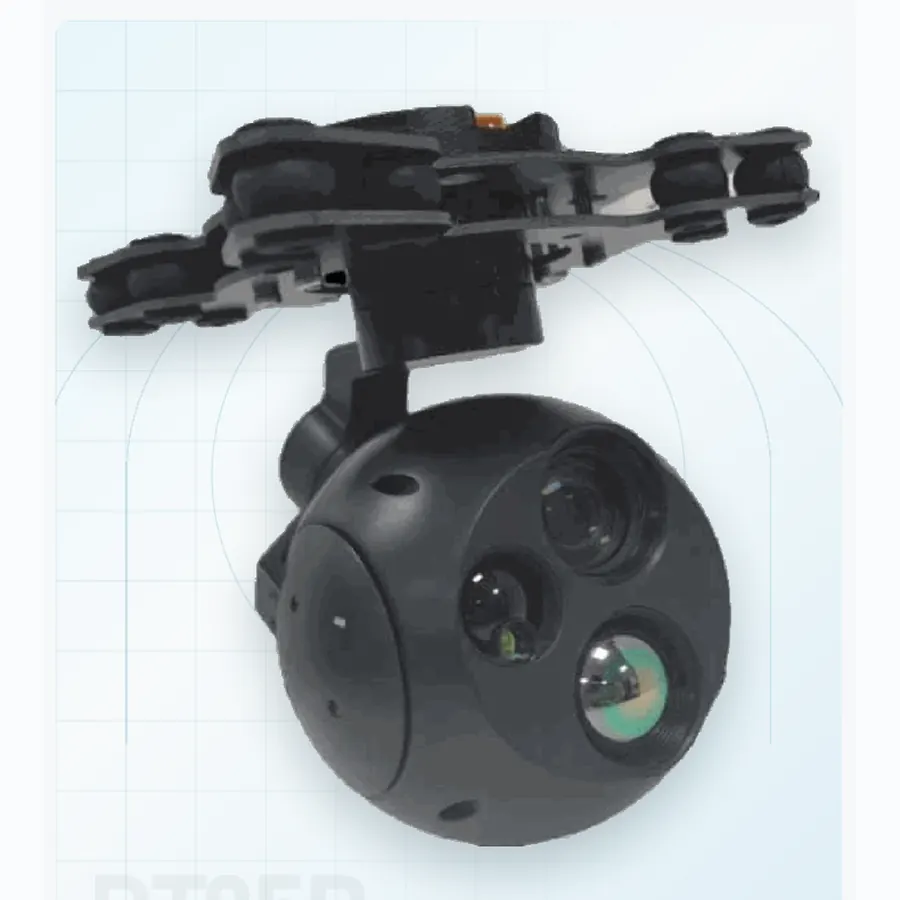
4K daylight, thermal vision and 1.5 km ranging.
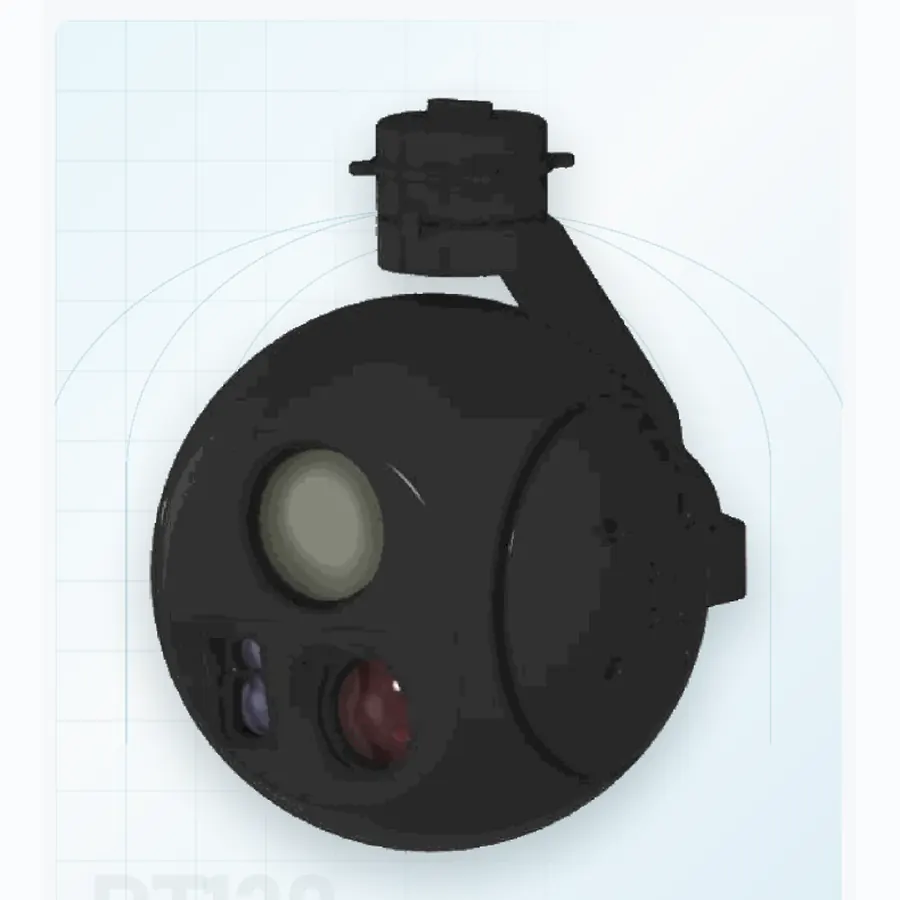
30× zoom, thermal imaging and 2 km ranging.
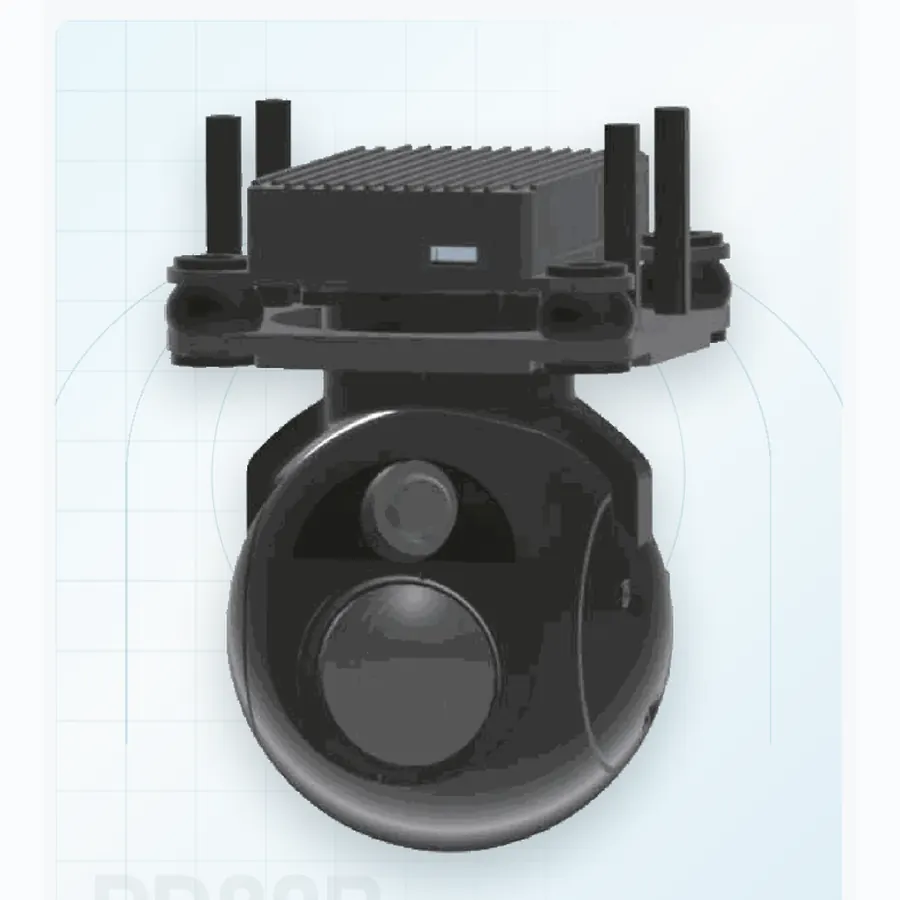
A 285 g terminal tracker for loitering munitions.
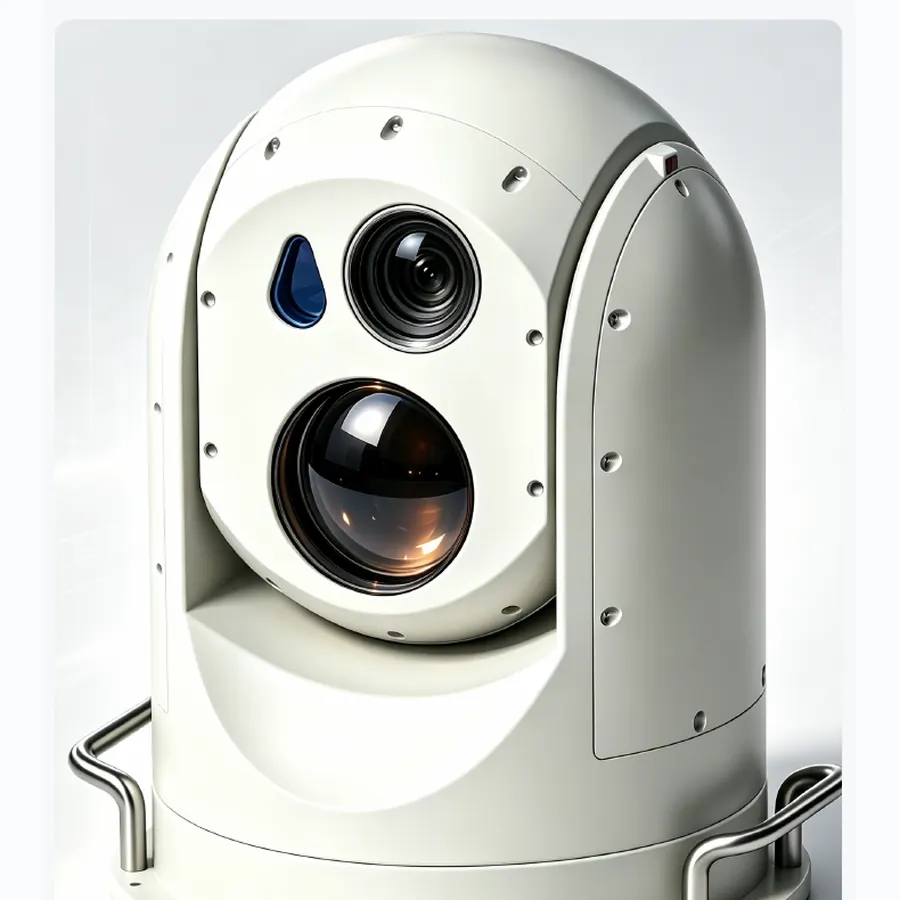
A 60× optical turret with a 75 mm thermal channel.
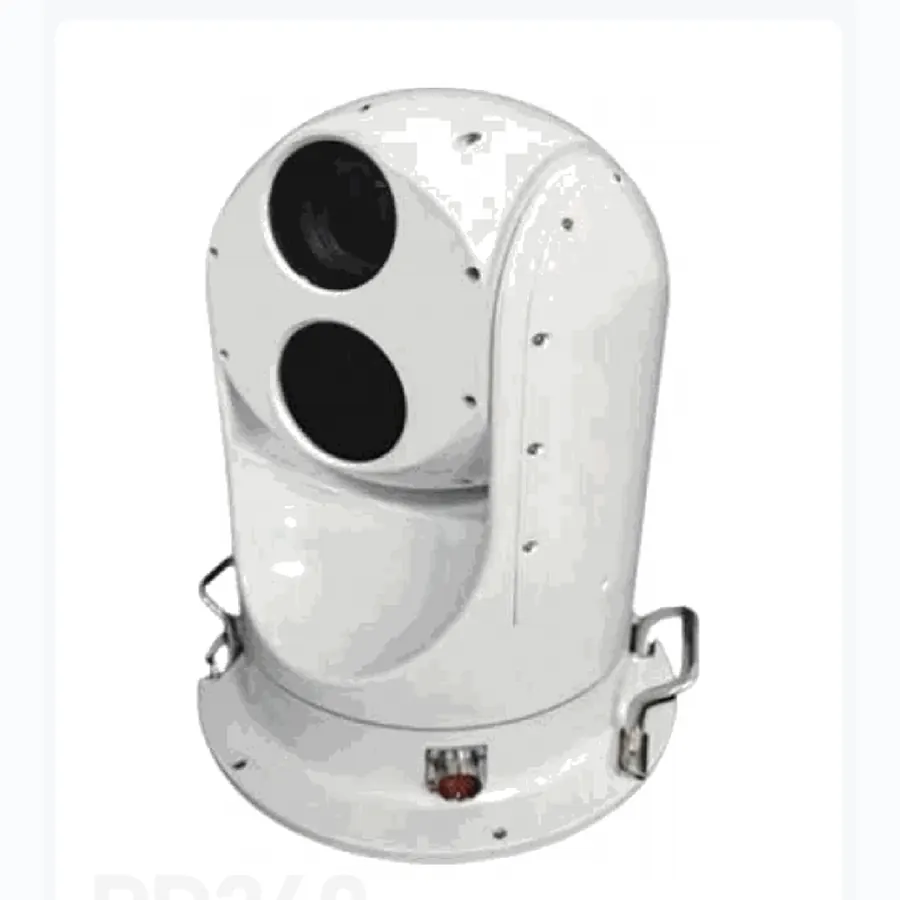
60× optical reach for wide-area surveillance.
Technical reading
Use the engineering guide to normalize claims across optics, stabilization, installed mass, power and interfaces before issuing a technical RFQ.
Engineering brief
Detector resolution is only one input. Contrast, lens, field of view and platform class decide whether a thermal drone camera is useful.
01 Engineering brief
A thermal drone camera is often bought to answer a question that visible imaging cannot: where is the warm object, how much of it is visible, and can the operator tell it apart from the background? Those questions depend on target-to-background temperature difference, emissivity, atmospheric transmission and the amount of the target that fills a detector pixel. They do not depend on resolution alone. A 640 × 512 imager with a suitable lens can outperform a higher-resolution device whose field of view spreads the target over too few pixels.
Write the requirement in observable terms. Is the task to detect a person at 300 m, recognise whether a vehicle is loaded at 1 km, or monitor a perimeter for movement? Each task needs a different combination of field of view, pixel coverage and image processing. For search, a wider field reduces the chance of missing an object. For identification, a narrower field puts more pixels on the target. The operator's display and the time available to reacquire also matter, because a narrow thermal image is difficult to search without cueing.
02 Engineering brief
The PD70 packages a 640 × 512 thermal core and a 4K visible camera into a 250 g three-axis gimbal. It is aimed at small UAVs that need stabilized day and night awareness while preserving endurance. The PD80B uses a longer 25 mm thermal lens in a lighter two-axis pod for terminal tracking from a loitering munition; its visible channel is deliberately wide to help the operator keep the target in context during the final approach.
For longer airborne missions, PT95B and PT130 add laser ranging and a third sensor channel. PT95B combines a 19 mm thermal lens with 4K visible imaging in a 700 g pod. PT130 offers a choice of 25 or 35 mm thermal optics and a 30× visible zoom in a 1.1 kg package. The larger aircraft can carry more optical reach, but it also pays in power, drag and integration effort.
Fixed-site thermal observation uses a different logic. The PD230 and PD240 place a 75 mm thermal channel on a 20 kg two-axis pedestal, while the PF400 counter-UAS turret uses the same class of thermal reach with a fast 360° steering architecture. These are not interchangeable with airborne pods simply because they share a detector format.
03 Engineering brief
For an uncooled thermal imager, resolution, pixel pitch and lens focal length determine the instantaneous field of view. A smaller pixel pitch can provide more angular resolution for a given focal length, but it also reduces the signal per pixel and places greater demands on optics and processing. The practical result is a system trade, not a simple “more pixels is better” rule. Ask for the detector format, pixel pitch, spectral band, noise-equivalent temperature difference and frame rate together.
Field of view is the number an operator feels immediately. A narrow lens makes a distant target larger but reduces situational awareness; a wide lens finds the target but may not classify it. Dual-field or zoom thermal optics can bridge the gap, but they add mass and cost. If the mission needs both, consider a two-channel architecture or a visible sensor for context. The thermal camera selection guide walks through the pixel-coverage calculation with representative target sizes.
Image processing also changes what the operator sees. Automatic gain control, digital detail enhancement, noise reduction and palette selection can improve usability, but aggressive processing can hide subtle contrast or make two different scenes look similar. Ask for raw or minimally processed frames when comparing cameras, and record the palette and gain mode used in every demonstration.
04 Engineering brief
Thermal images are especially sensitive to motion because low-contrast scenes provide few features for the eye to anchor on. A small amount of jitter that is tolerable in a bright visible image can make a thermal target unreadable. The gimbal's residual motion at the selected lens, the aircraft vibration spectrum and the display latency therefore need to be assessed together. A three-axis pod is not automatically stable, and a two-axis pod is not automatically inadequate; the installed result is what matters.
Check how the camera behaves during a slow search pattern, a fast slew and a hover in wind. Look for image smear, lag and overshoot. If the payload has tracking, test what happens when the target passes behind a tree or a building. Does the track coast, stop or jump to a new object? A thermal camera that finds a target but loses it during handoff is not delivering the mission outcome.
05 Engineering brief
Thermal cores can draw more power during startup and at extreme temperatures, especially when a heater or cooler is involved. Obtain startup, steady-state and peak figures at the intended ambient temperature. Confirm the input voltage range and connector type, and check whether the airframe can tolerate the inrush without a brownout. For a small UAV, a few watts can translate directly into minutes of endurance.
Video transport should be specified by format, resolution, frame rate, compression and latency. If the camera outputs raw thermal data for analytics, confirm the data format and synchronization method. If it outputs compressed video, confirm whether the thermal and visible streams are separate or fused, and whether the overlay is burned into the image. For fixed installations, also check network protocols, cybersecurity assumptions and behaviour after a link interruption.
Environmental protection needs more than an IP rating. Ask about operating temperature, thermal cycling, humidity, salt fog where relevant and window heating or defogging. A thermal window that fogs or collects dust will lose contrast no matter how good the detector is. The cleaning method and replacement procedure should be part of the deployment plan.
06 Engineering brief
Request matched thermal frames at three distances, with the target type, background temperature, lens, gain mode and processing settings recorded. Ask for a sequence that includes a slow pan, a fast slew and a target moving behind partial cover. Measure power at startup and after thirty minutes of operation. Confirm the mechanical drawing, connector schedule and mounting hardware.
On receipt, repeat the same tests before installing the payload. Keep a reference frame for each gain mode and lens. If the camera supports radiometry, verify the calibration and measurement workflow against a known source; do not assume that a thermal image with a temperature overlay is calibrated. For non-radiometric use, record the qualitative settings so that later comparisons are meaningful.
Thermal imaging is a powerful tool, but it is not a substitute for a complete mission architecture. Pair it with visible imaging where identification matters, with a rangefinder where target location matters, and with a stable data link where the operator needs to act on what the camera sees. The application pages map these combinations to ISR, border, maritime and counter-UAS tasks.
Questions from integration teams
For many airborne ISR and inspection tasks, yes, provided the lens and field of view put enough pixels on the target. The required pixel coverage depends on whether the operator needs detection, recognition or identification. A higher-resolution detector is not useful if the lens, stabilization or data link cannot preserve the detail.
Only if the mission requires temperature measurement rather than thermal contrast. Radiometry adds calibration, emissivity and measurement-workflow requirements. If the task is to detect people or vehicles, a well-configured non-radiometric imager may be sufficient and easier to integrate.
Thermal radiation is attenuated by water vapour, dust and dense smoke, and performance falls with distance and humidity. It can reveal contrast that visible light cannot, but it is not an all-weather guarantee. Ask for test data under the conditions the mission expects, not only on a clear baseline day.
Palette and gain settings change the mapping from temperature contrast to display brightness or colour. A palette can make a scene easier to read, but it can also exaggerate or hide differences. Standardize the palette and gain mode for comparisons, and keep the raw frame if a technical decision depends on it.
Product directory
Every category page links to the full model range, application notes and the current evidence package.
06 systemsAirborne payloadsSix stabilized pods from 190 g to 1.1 kg. Use visible, thermal and laser channels according to aircraft mass, endurance and recognition range.
02 systemsEO/IR turretsTwo fixed-site turrets for persistent 60× optical and 75 mm thermal watch, with mount and sector coverage matched to the site.
 04 systemsPrecision seekersFour documented envelopes from Ø40 to Ø93 mm for terminal homing, target confirmation and guided-munition integration.
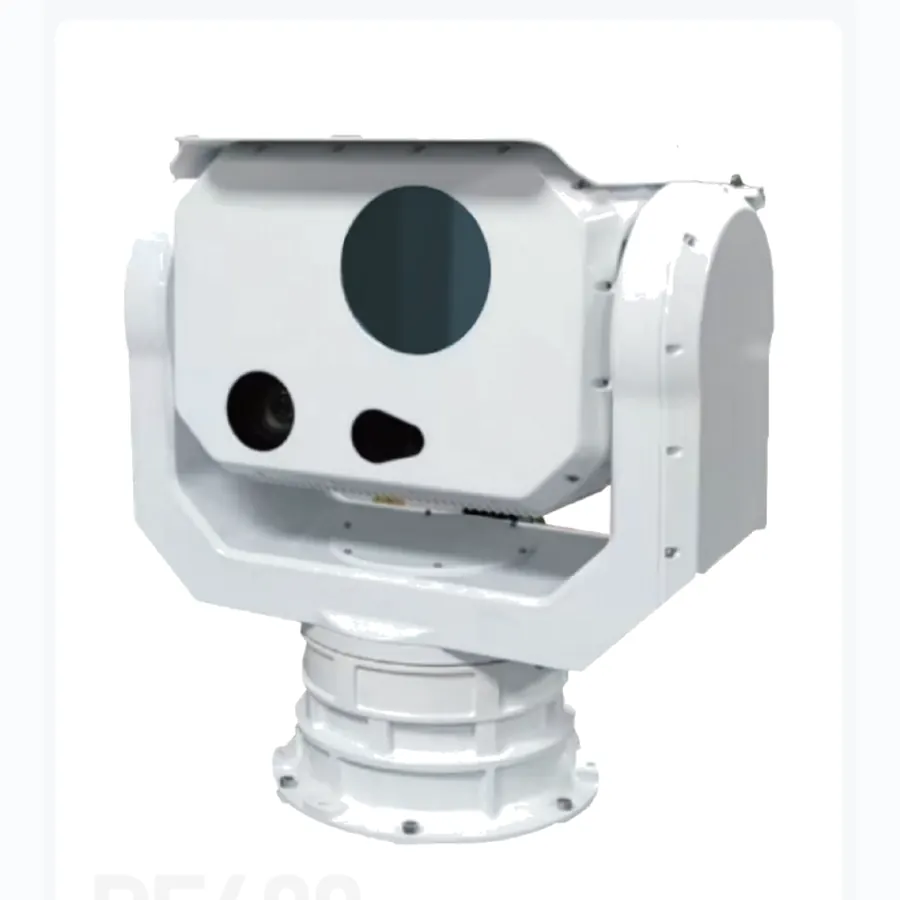 01 systemsCounter-UASOne 360° pedestal configured for rapid search, track acquisition and a clean handoff to an interceptor or effect layer.
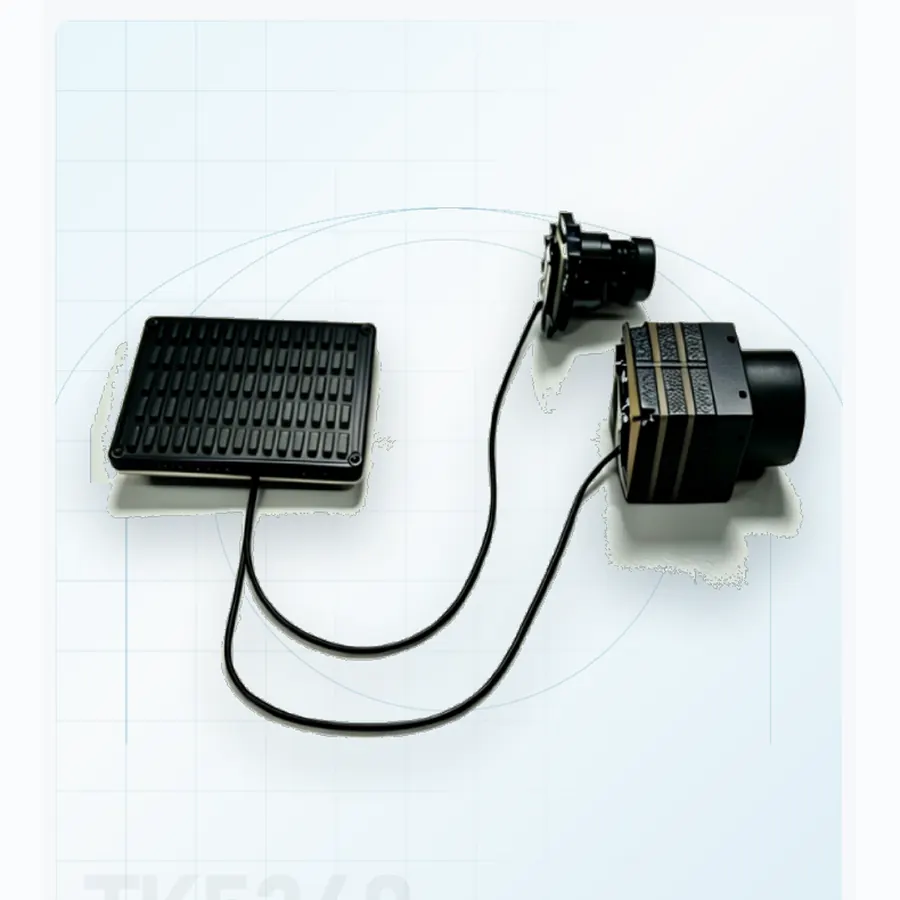 01 systemsAI coreAn onboard processing module for target recognition and track continuity when live video must be interpreted at the edge.
OEM and programme support
Share the platform, target set, range and interface constraints. We will map the relevant format and current documentation.