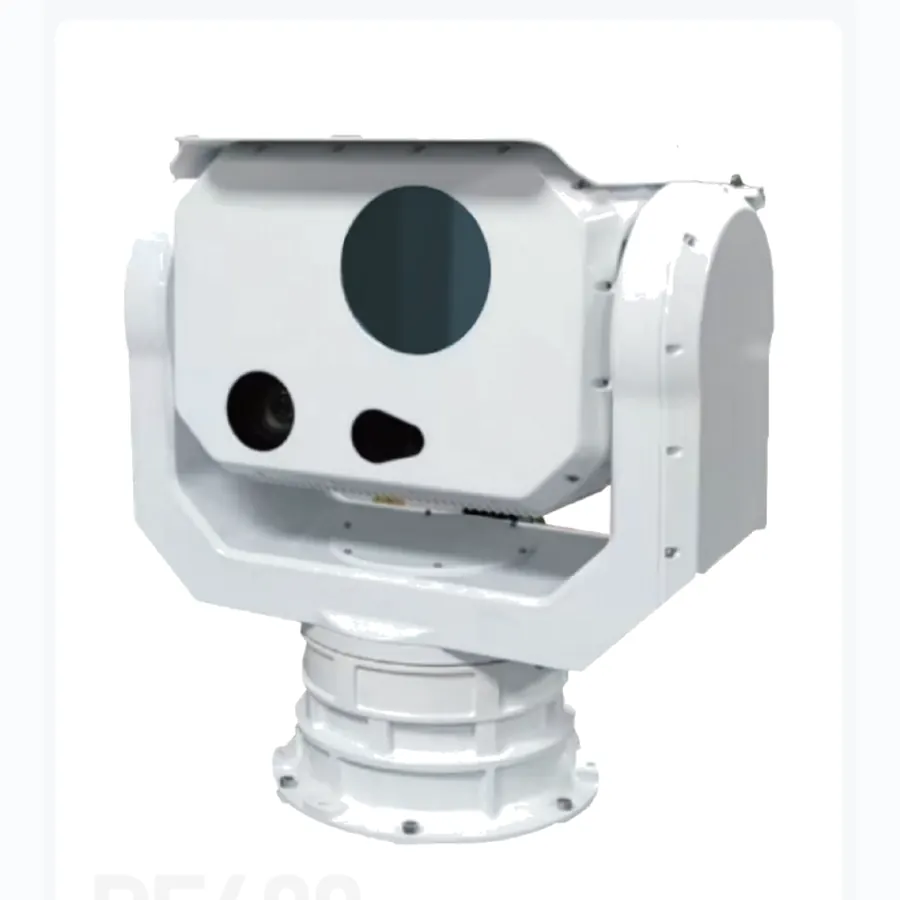
Tri-sensor counter-UAS turretCounter-UAS
PF400
A fixed-site counter-UAV eye with a 3-second panoramic scan.
360° / 3 sScan
7.3 km UAVVisible
IP66Rating
Counter-UAS
A counter-UAS optical layer must search, classify, track and hand off without losing the target. The turret, processing module and terminal seeker have different jobs.
Selection criteria
Use the same requirement boundary for every candidate, then compare documented evidence rather than headline numbers.
Define sector, revisit time, target size and the optical channel used for initial detection.
Check stabilization at the operating zoom and confirm behaviour through clutter, occlusion and handoff.
Agree the coordinate frame, update rate, timestamp and track-loss state required by the response layer.
Supplier evaluation
Ask for evidence across search, classification, stabilized tracking and handoff, including the interface used by the response layer.
Product family
Open a model page for supplier-stated specifications and integration notes.
A fixed-site counter-UAV eye with a 3-second panoramic scan.
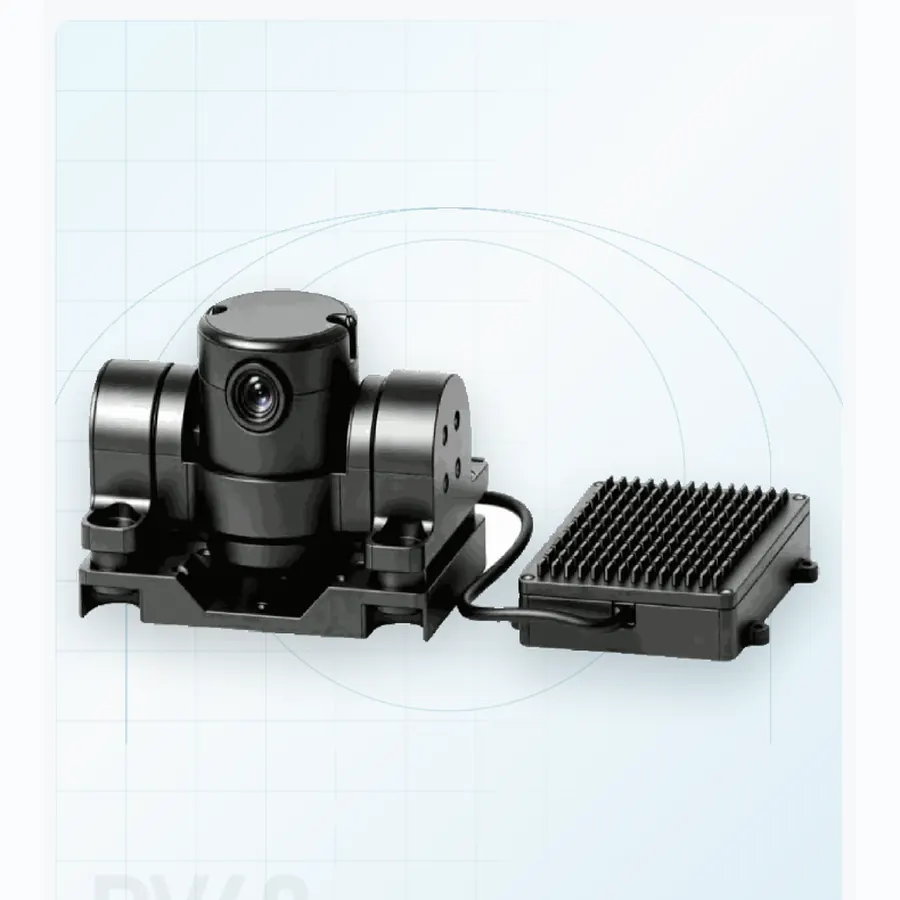
A 190 g stabilized eye for FPV interceptors.
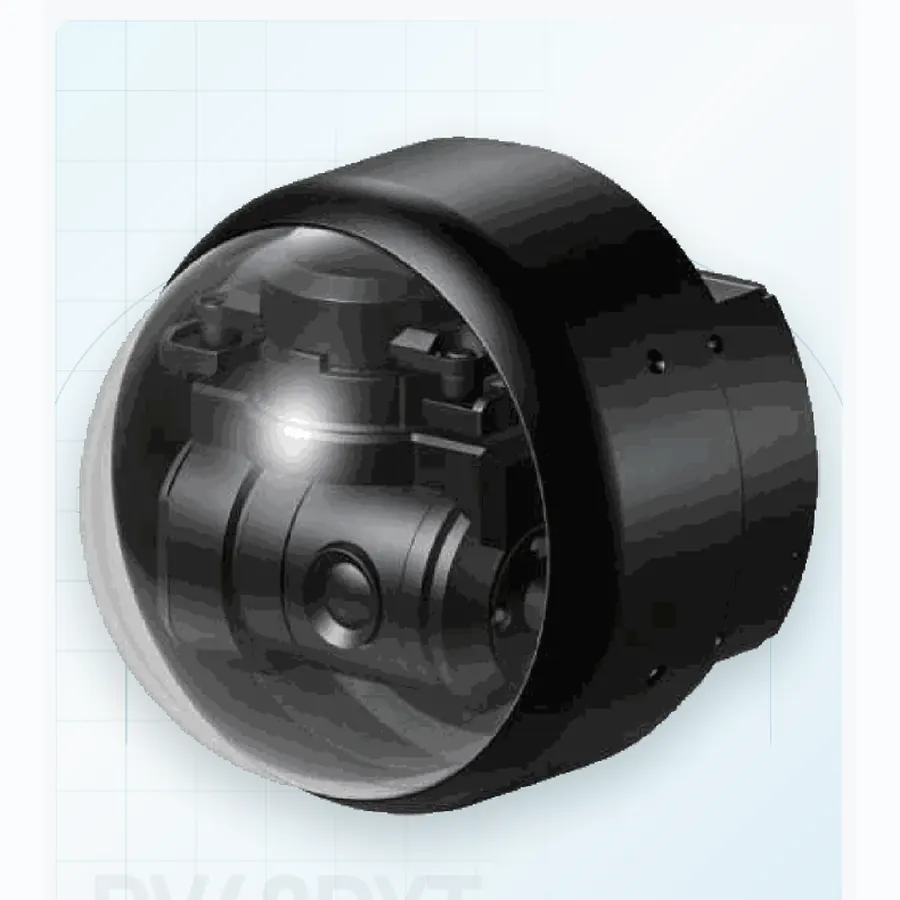
Stabilized vision at 200 m/s.
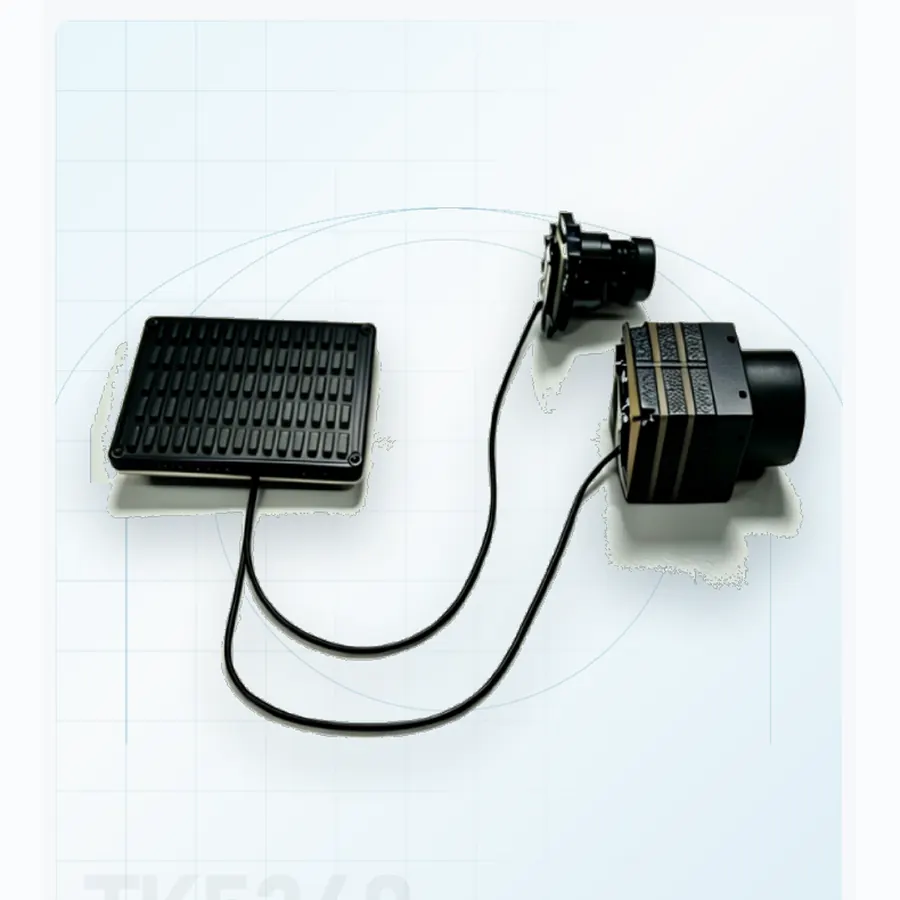
Low-latency recognition for FPV and industrial UAVs.
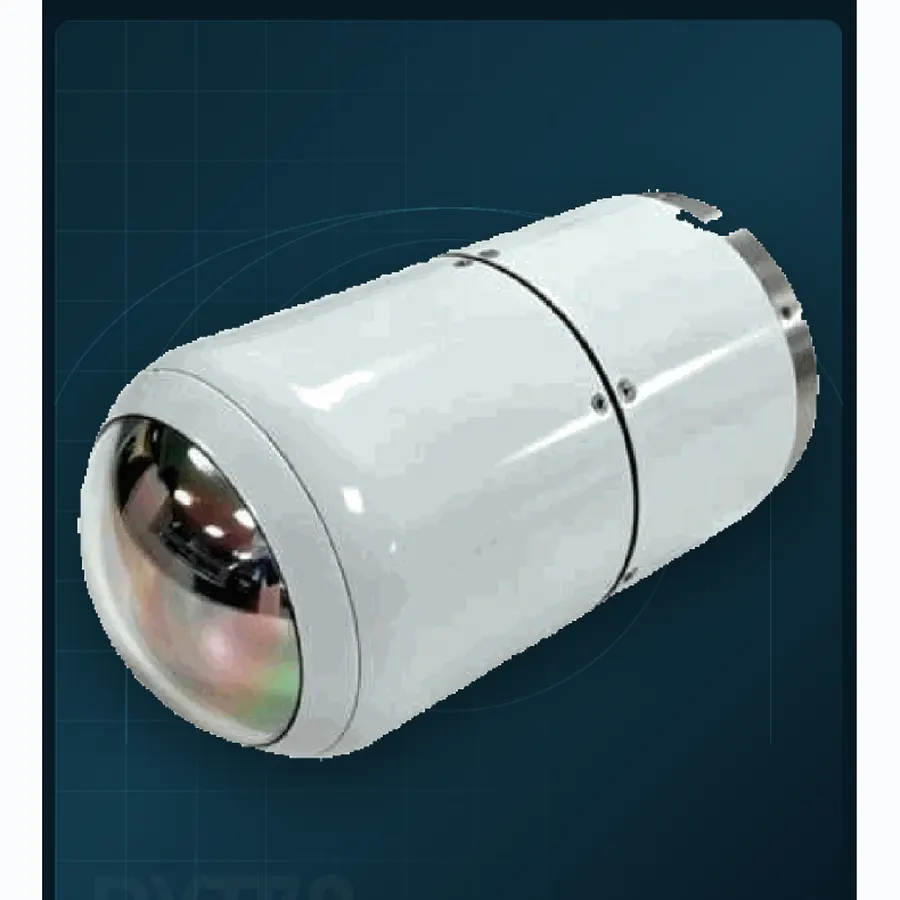
Infrared guidance for Mach 2 air-defence intercept.
Technical reading
Use the engineering guide to normalize claims across optics, stabilization, installed mass, power and interfaces before issuing a technical RFQ.
Engineering brief
A counter-UAS turret is judged by how quickly it finds a small target, confirms it and passes a usable track to the response layer.
01 Engineering brief
Counter-UAS work is often described as detection, but detection is only the first link. A useful system must find a small object against a complex background, determine whether it is relevant, maintain a stable track as it manoeuvres, and pass enough information to an effector or human decision-maker. The turret's optical performance matters, but so do the search pattern, the false-alarm rate, the latency of the track output and the interface to the command-and-control system.
A fixed-site counter-UAS turret therefore needs to be specified around the response layer. If the response is a human patrol, a few seconds of latency may be acceptable. If the response is an automated effector, the track update rate, coordinate frame, time stamp and handoff protocol become safety-critical. The procurement team should write the mission chain down before comparing turrets.
02 Engineering brief
The PF400 combines a 30× visible zoom, a 75 mm thermal imager, a 5 km laser rangefinder and a fast steering mirror in a 20 kg fixed-site housing. The published 3-second panoramic scan and 360° continuous slew describe an architecture optimized for rapid search rather than slow cinematic observation. Its visible UAV detection figure reaches 7.3 km, while the IR figure is 1.5 km; the difference illustrates how strongly thermal detection depends on target contrast and atmospheric path.
The fast steering mirror can correct small line-of-sight errors at high bandwidth, but it does not replace a stable pedestal or a well-designed control loop. Ask how the mirror and the azimuth/elevation axes share the correction, what the usable field is at maximum zoom, and how the system behaves when a target crosses the mirror's range. Those details determine whether the turret can hold a track during a close pass or a rapid manoeuvre.
03 Engineering brief
A 360° panorama every three seconds sounds straightforward until the site environment is considered. Birds, clouds, insects, reflections, drones and distant aircraft can all produce detections. The system needs a way to separate persistent tracks from transient clutter, and the operator needs a display that makes the decision quickly. Ask for the detection logic, the track initiation criteria and the false-alarm behaviour in the presence of birds and moving foliage.
Cueing can come from radar, RF sensors or a remote operator. The turret should accept a cue in a defined coordinate frame, slew to the predicted position and acquire the target without losing time to a full scan. Test the cue-to-lock time with a realistic angular offset and target speed. A fast slew is not useful if the optical system needs several seconds to settle or refocus.
For a multi-sensor site, define which sensor owns the track at each stage. Radar may provide the initial cue; the turret provides visual confirmation; the effector receives a refined track. Each handoff needs a common time base and a clear definition of the target state. Otherwise the response layer may act on a stale or misidentified object.
04 Engineering brief
The PF400's 20 kg mass, 430 mm diameter and IP66 housing impose real installation requirements. Check the mast stiffness, wind loading, cable routing and service access. The turret needs a stable power supply with surge protection and a network path that can carry video plus metadata. If the site has radar or RF equipment, check electromagnetic compatibility and the physical separation needed to avoid interference.
Counter-UAS deployments also raise legal and safety questions that are outside the camera specification. Detection and tracking must comply with local surveillance, radio and airspace rules. The system should log operator actions and track decisions so that incidents can be reviewed. A turret that produces a compelling image but no auditable record is incomplete for an operational site.
Environmental testing should cover rain, dust, temperature extremes and window contamination. A dirty or fogged window can reduce the visible detection range far below the headline figure. Ask about wiper or defogging options, maintenance intervals and the procedure for cleaning without disturbing boresight.
05 Engineering brief
Start with a static target board at several ranges and contrasts to establish the optical baseline. Then use a small UAV flying representative profiles: crossing, approaching, receding and hovering. Record detection time, track initiation, track continuity and loss-of-track events. Repeat with a bird or a non-target object to observe false alarms. If the system accepts external cues, test the cue-to-lock sequence with realistic latency.
At the end of each run, export the track log and compare it with the video time base. Check the coordinate convention, update rate and behaviour when the target leaves the field. The acceptance report should state the conditions, not just a pass/fail. A turret that works on a clear day at 2 km may behave differently in haze, rain or a cluttered urban background.
Finally, test the handoff to the response layer. A track that looks stable on the turret display may be unusable if the receiving system expects a different coordinate frame or a higher update rate. The counter-UAS detection-to-handoff guide expands this workflow, and the engineering team can review a site-specific architecture.
Questions from integration teams
No. The published figure is a visible-band detection statement under defined target and atmospheric conditions. Small, low-contrast or distant targets will be detected closer, and thermal detection is shorter. Treat the figure as a best-case reference and require matched test data for the target and environment.
Visible imaging provides detail in daylight, thermal imaging provides contrast at night or against cool backgrounds, and laser ranging supplies distance for target location and track handoff. The channels must be boresighted and their data time-aligned for the combination to be useful.
No. Acquisition also depends on field of view, stabilization, detection logic and the operator or cueing interface. Measure the full cue-to-lock sequence, including settling and confirmation, rather than only the scan rate.
That depends on the available video, control and metadata interfaces. Ask for protocol documentation, coordinate conventions and a test endpoint before committing. A demonstration that only shows video is not evidence of a usable track handoff.
Product directory
Every category page links to the full model range, application notes and the current evidence package.
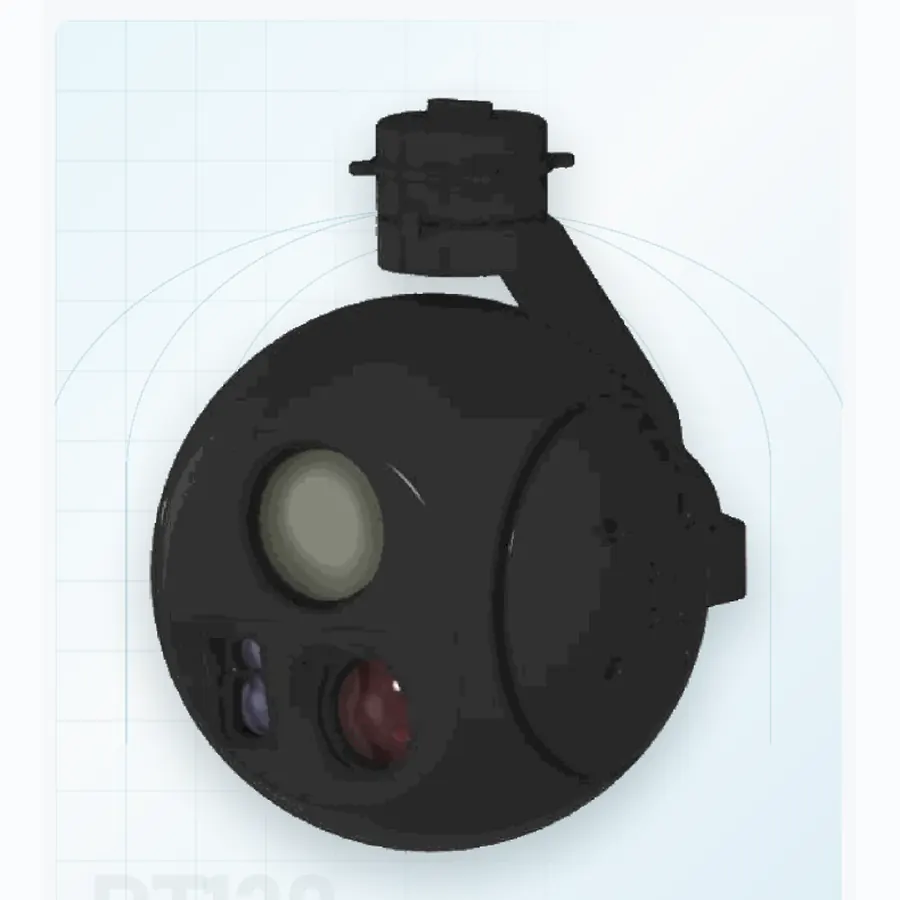 06 systemsAirborne payloadsSix stabilized pods from 190 g to 1.1 kg. Use visible, thermal and laser channels according to aircraft mass, endurance and recognition range.
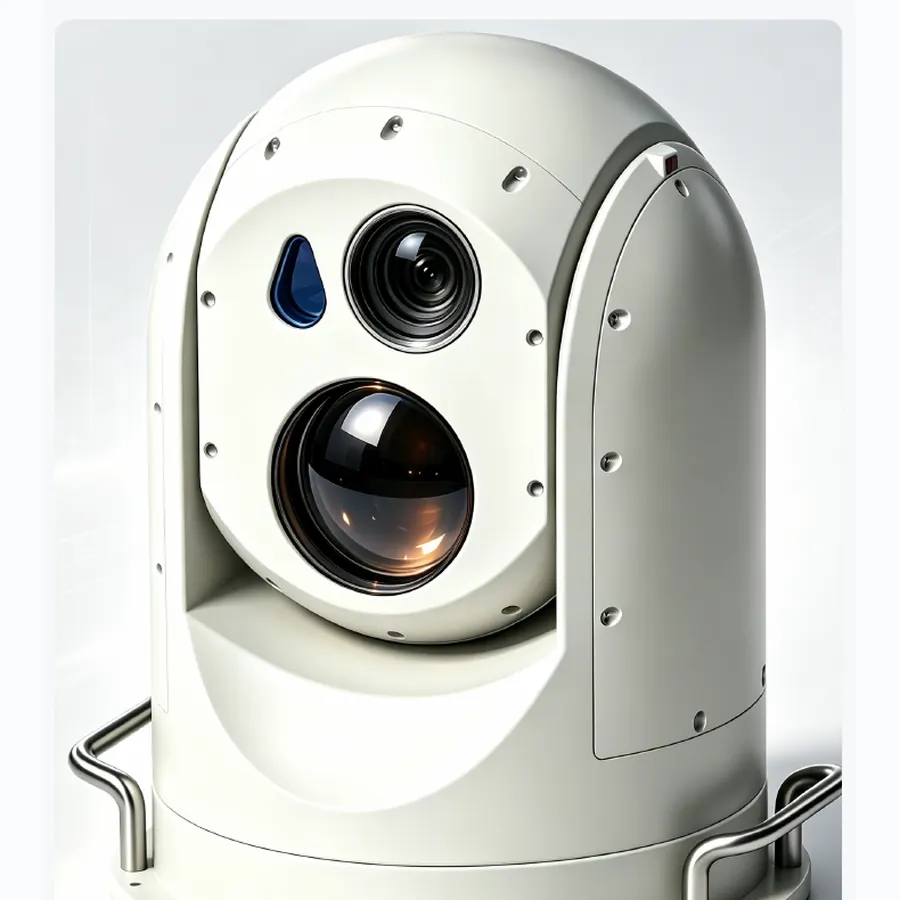 02 systemsEO/IR turretsTwo fixed-site turrets for persistent 60× optical and 75 mm thermal watch, with mount and sector coverage matched to the site.
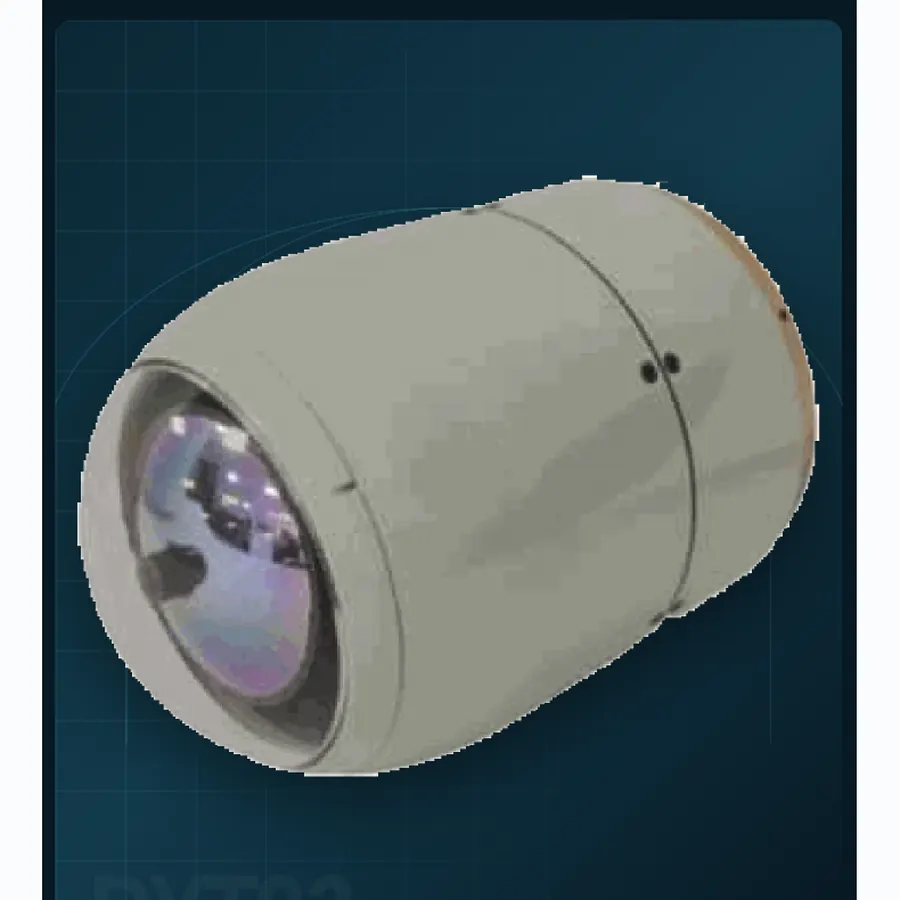 04 systemsPrecision seekersFour documented envelopes from Ø40 to Ø93 mm for terminal homing, target confirmation and guided-munition integration.
01 systemsCounter-UASOne 360° pedestal configured for rapid search, track acquisition and a clean handoff to an interceptor or effect layer.
01 systemsAI coreAn onboard processing module for target recognition and track continuity when live video must be interpreted at the edge.
OEM and programme support
Share the platform, target set, range and interface constraints. We will map the relevant format and current documentation.