
Technology
The optical stack.
Detection, classification, stabilization and guidance are designed to work as one system, with each layer specified around the mission.
Core capabilities
One line of sight.
Four decisions.
The portfolio is organized around what the system must do next, not around a single sensor format.
EO/IR imaging
Visible and thermal channels provide complementary target signatures across lighting and weather conditions.
Stabilization
Two- and three-axis control reduces vibration and airframe motion to keep the target centred.
AI object detection
TK5340 supports person, vehicle, boat and UAV classes with ≤35 ms tracking latency.
Multi-sensor fusion
Visible, infrared and laser data can share a common line of sight in tri-sensor payloads.
Precision guidance
Seeker formats scale from a 200 g visible unit to dual-sensor IR / TV configurations.
Integration
Mechanical, electrical and optical interfaces are reviewed against the host platform.
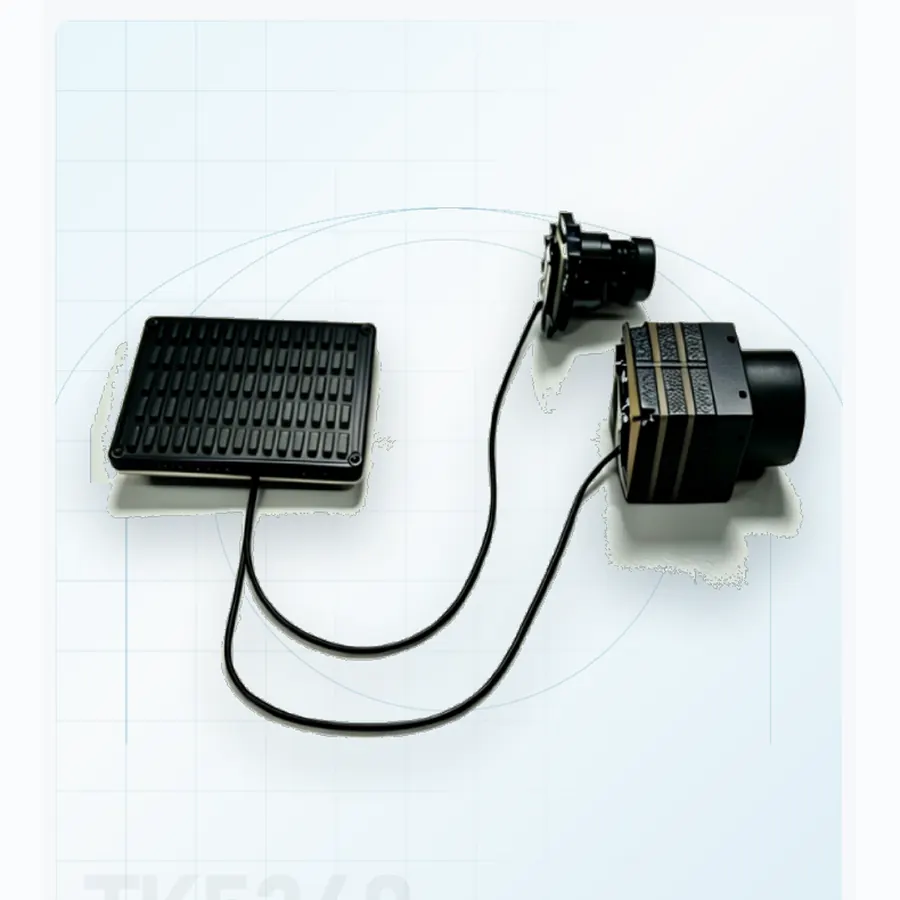
Edge compute
AI that stays on the platform.
TK5340 processes visible and infrared video onboard, supporting manual selection, automatic recognition and multi-target tracking without relying on a remote compute link.
- AI computeRK3576 · 6 TOPS
- Tracking latency≤ 35 ms
- Target classesPerson · vehicle · boat · UAV
Engineering
Specify the stack.
Share the sensing problem and platform envelope. We will map the relevant optical, stabilization and guidance options.